Minoxidil and finasteride are the best-known treatments for hereditary hair loss. Yet many people are looking for an alternative: because of possible side effects, because they do not want to commit to a medicine for life, or because finasteride is not approved for women. Here you will find out which cosmetic active ingredients have proven convincing in studies – some even in direct comparison with minoxidil. The studies were carried out with the respective active ingredients, not with our products. Please have severe or sudden hair loss checked by a doctor.
Key facts at a glance
- Caffeine was just as effective as minoxidil 5 % after six months in a study of 210 men.
- Rosemary oil increased hair count as much as minoxidil 2 % in a study of 100 men – with less itching.
- Melatonin increased the proportion of hairs in the growth phase in women.
- Saw palmetto, Capixyl™ and Procapil™ target the hormone DHT and the anchoring of the hair.
- Minoxidil only works for as long as you use it; in 2025 the European Medicines Agency confirmed suicidal thoughts as a side effect of finasteride.
Minoxidil and finasteride: a brief explanation
Minoxidil is a solution or foam that prolongs the growth phase of the hair. The effect only lasts as long as you use it: according to the package leaflet, continuous use is necessary, otherwise hair loss begins again[1]. Finasteride is a tablet that inhibits the conversion of testosterone into DHT. In 2025 the European Medicines Agency (EMA) confirmed suicidal thoughts as a side effect of finasteride; since then, packs of the 1 mg tablets have included a patient card[2]. Both treatments are effective – decide on the benefits and risks together with your doctor.
Caffeine: equivalent to minoxidil in a head-to-head comparison
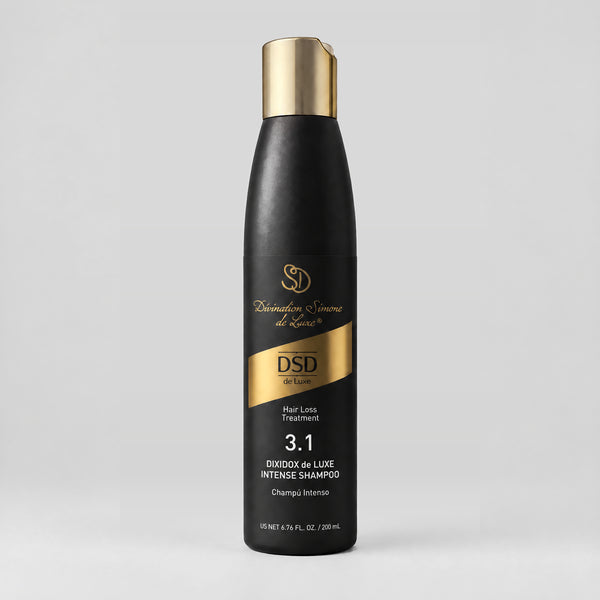
In a randomised study of 210 men with hereditary hair loss, a caffeine solution (0.2 %) was just as effective as minoxidil 5 % after six months: the proportion of hairs in the growth phase rose by 10.6 % versus 11.7 % – no significant difference[3]. Caffeine is found in Intense Shampoo 3.1, in Exogrow Booster Shampoo 9.1 and in the Opium line 7.1 and 7.4.
Rosemary oil: as effective as minoxidil 2 %
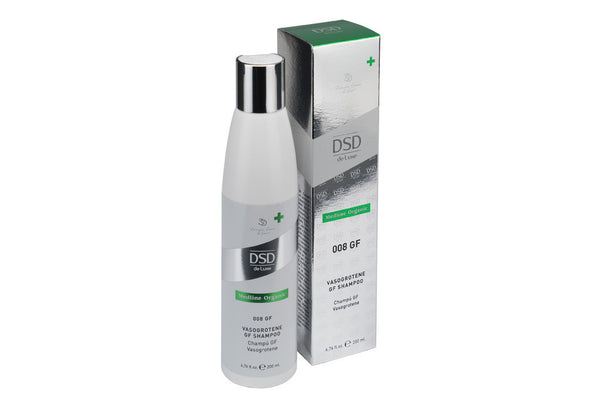
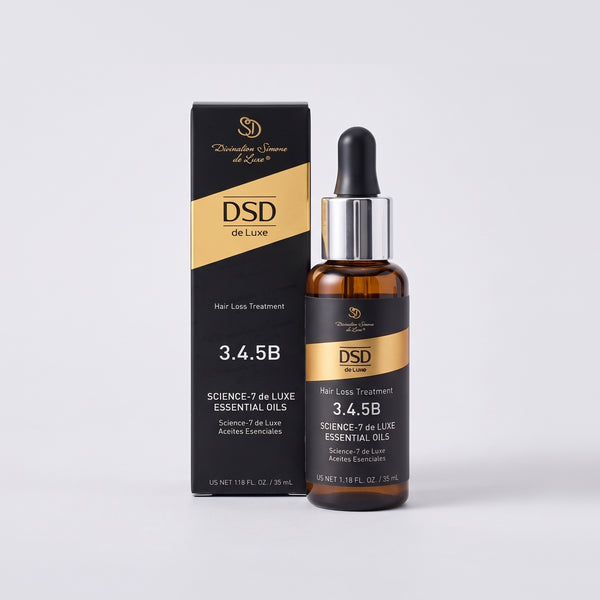
In a randomised study of 100 men, hair count increased after six months as much with rosemary oil as with minoxidil 2 %; scalp itching occurred less often with rosemary oil[4]. Rosemary oil is found in Vasogrotene GF Shampoo 008GF, in Activator 011GF and in Science-7 Essential Oils 3.4.5B.
Melatonin: more hairs in the growth phase
In a placebo-controlled study of 40 women, a melatonin solution significantly increased the proportion of hairs in the growth phase after six months[5]. Melatonin is combined with Kopyrrol in liposomes in Aminopyrrole + Melatonin Lotion 9.4 – in a user study, the number of hairs falling out dropped by 71 % after 56 days.
Saw palmetto, Capixyl™ and Procapil™: against the effect of DHT
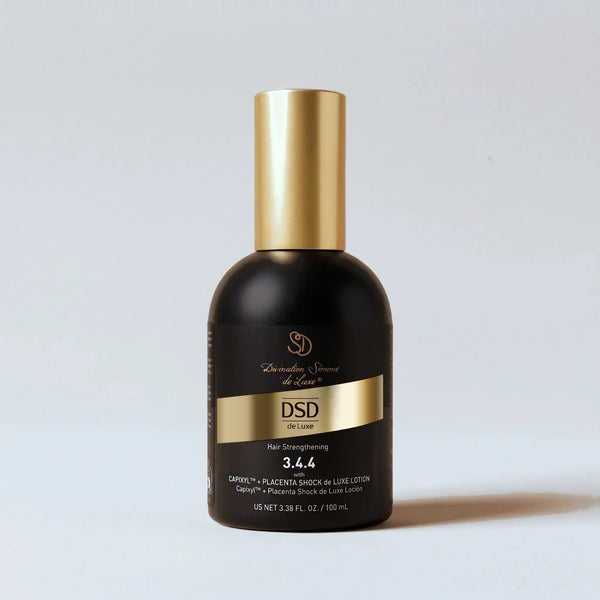
In laboratory studies, saw palmetto extract inhibits the enzyme 5-α-reductase – the same target as finasteride, but as a care product applied to the scalp. Capixyl™ and Procapil™ are peptide-plant complexes that support the anchoring of the hair in the scalp. You will find details and studies in our article Saw palmetto, caffeine, Capixyl™ & co. In a 12-week study, Capixyl™ + Placenta Shock Lotion 3.4.4 reduced excessive hair loss in 70 % of participants; Procapil™ is found in DEKOHAIR™.
Who is a cosmetic alternative suitable for?
- For early-stage or mild hair loss and thinning hair.
- For women, for whom finasteride is not approved.
- For maintenance if you want to stop minoxidil – discuss this with your doctor beforehand.
- As a complement to medical treatment.